Best Emotional Support Animals for Nebraska Apartments — A Clinician-Vetted Lineup
Choosing the right emotional support animal for a Nebraska apartment is a decision that deserves the same thoughtful care as any clinical recommendation. The species you select, the temperament you prioritize, and the size you can realistically accommodate in an Omaha studio or a Lincoln one-bedroom will all shape whether your ESA genuinely augments your mental health treatment — or quietly becomes a source of additional stress. This clinician-vetted lineup is designed to help you think through those variables with clear eyes, grounded in the federal protections established by the Fair Housing Act (FHA) and HUD's authoritative guidance notice, FHEO-2020-01 (Assessing a Person's Request to Have an Animal as a Reasonable Accommodation Under the Fair Housing Act), as well as Nebraska's own landlord-tenant framework.
Before diving in, one foundational point bears emphasis: the legal instrument that protects your right to keep an emotional support animal in a Nebraska apartment is an ESA letter issued by a licensed mental health professional (LMHP) who holds an active Nebraska license — typically a licensed clinical social worker (LCSW), licensed mental health counselor (LMHC), licensed marriage and family therapist (LMFT), psychologist, or psychiatrist. There is no national ESA registry, no ESA certification database, and no ID card that carries legal weight. HUD has explicitly confirmed that online registries offering certificates or ID badges for a flat fee are not legitimate accommodation documentation. What matters, legally and clinically, is the individualized professional judgment of a qualified Nebraska clinician who has evaluated your specific mental health needs. Learn more about securing that documentation on our Nebraska ESA Housing Letter & FHA guide.
With that foundation in place, here are the ten best emotional support animals for Nebraska apartment dwellers — ranked not by popularity alone, but by practical suitability, noise profile, space requirements, and the breadth of therapeutic benefit they may offer to qualifying individuals.
1. Dogs — The Benchmark Companion
It would be clinically dishonest to open any ESA list without acknowledging that dogs remain the most extensively studied and most commonly recommended emotional support animals in the professional literature. Their capacity for attunement — the near-uncanny ability to mirror human emotional states — makes them uniquely valuable for individuals managing depression, generalized anxiety disorder, PTSD, and a range of other conditions for which a Nebraska-licensed clinician might determine an ESA is therapeutically appropriate. The tactile comfort of petting a dog has been associated in peer-reviewed research with measurable reductions in cortisol levels, and the routine of walking, feeding, and caring for a dog imposes a gentle daily structure that many people in mental health treatment find stabilizing.
For Nebraska apartment living specifically, breed selection is everything. A 900-square-foot Lincoln apartment can comfortably house a well-exercised Cavalier King Charles Spaniel or a French Bulldog; it is considerably less well-suited to a Border Collie who requires sustained mental stimulation and two hours of vigorous daily activity. Noise is another legitimate landlord concern — and while FHA reasonable accommodation protections mean your landlord cannot categorically ban your ESA dog, excessive barking that genuinely disturbs other tenants falls outside the scope of what the law requires a housing provider to tolerate. Choosing a breed with a lower-barking profile respects both your neighbors and the durability of your tenancy. Our detailed guide to ESA dogs and Nebraska-best apartment breeds walks through specific breed recommendations with temperament notes.
One practical consideration unique to Nebraska: several municipalities, including Omaha, have historically maintained breed-specific legislation (BSL) targeting certain large breeds. While FHA reasonable accommodation requests can sometimes provide a pathway to challenge BSL in housing contexts, this is a legally complex area. Consult a Nebraska-licensed attorney before relying on FHA protections to override a municipal BSL ordinance.
Practical Takeaway: Dogs offer the broadest therapeutic toolkit of any ESA species, but apartment suitability hinges on honest breed selection. Prioritize low-energy, lower-barking breeds, and pair your ESA letter with basic obedience training — see our ESA training basics for Nebraska — to protect your housing stability.
2. Cats — The Underrated Anchor
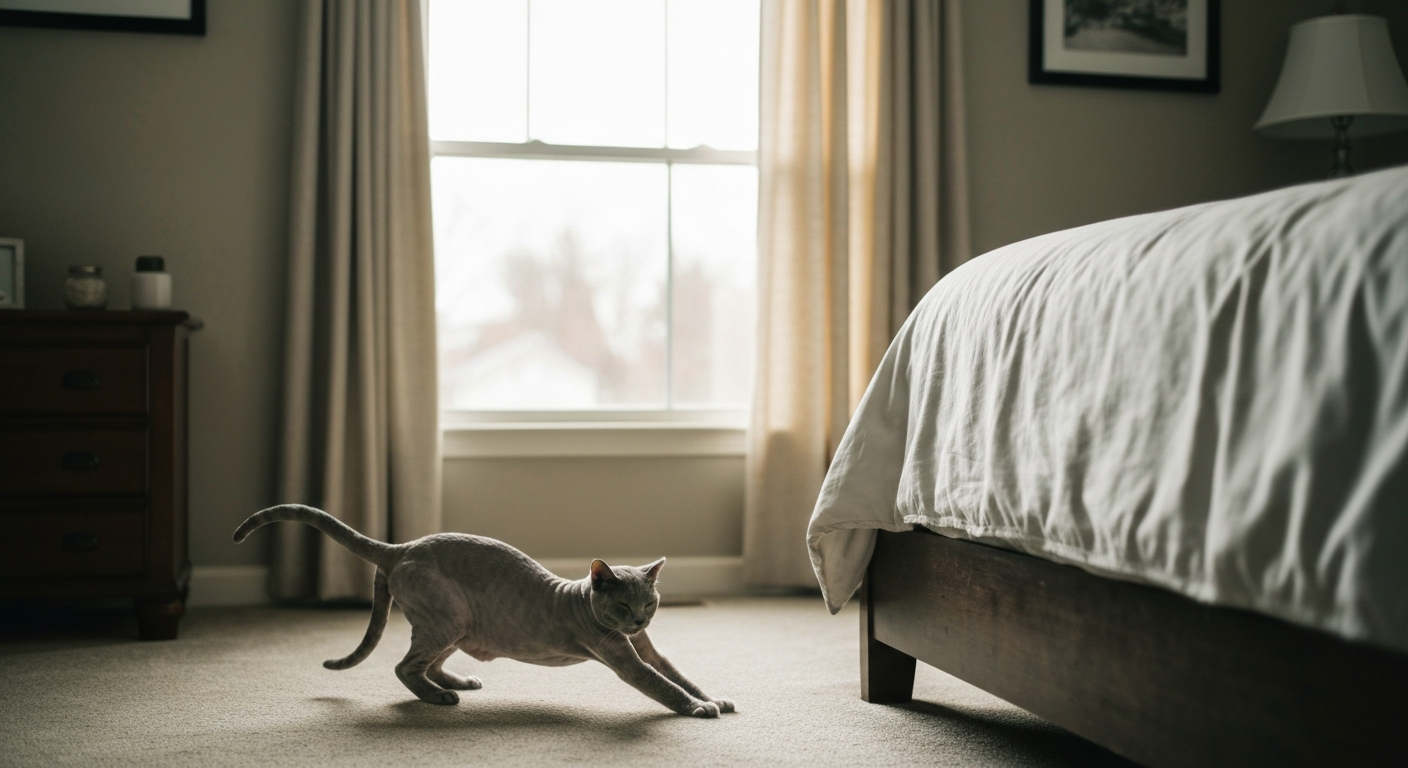
Cats are, by almost every apartment-logistics metric, the ideal ESA species — and yet they are frequently underestimated in popular discussions that default to dogs. A cat requires no outdoor access, produces far less noise than most dogs, maintains itself with minimal intervention, and can provide profound comfort through purring, proximity, and the subtle rhythms of cohabitation. The vibration frequency of a cat's purr (typically 25–50 Hz) has been studied for its potential calming physiological effects, and many individuals managing social anxiety, insomnia secondary to anxiety, or depressive episodes find the low-demand companionship of a cat particularly well-matched to their capacity on difficult days.
For Nebraska apartment dwellers navigating tight square footage — common in Omaha's Midtown corridor, Lincoln's near-campus neighborhoods, or the more compact rental stock of Grand Island and Kearney — a cat's self-contained lifestyle is a genuine asset. Certain breeds carry reputations for being especially calm and quiet: the Ragdoll, the British Shorthair, and the Scottish Fold are frequently cited by veterinary behaviorists, though a licensed clinician will rightly focus on the individual animal's temperament over breed generalizations. Shedding and allergen management are worth planning for in smaller spaces; regular grooming and a HEPA filter can significantly reduce the friction that might otherwise affect your relationship with neighbors or building management.
Under HUD's FHEO-2020-01 guidance, a housing provider who maintains a no-pets policy cannot automatically deny a reasonable accommodation request for an ESA cat simply because of that policy. The provider may ask only whether the individual has a disability-related need for the animal — not for a diagnosis — and whether the animal poses a direct threat or fundamental alteration to the housing. A properly issued ESA letter from a Nebraska LMHP addresses the first element directly. Explore our full breakdown at ESA cats in Nebraska: quiet companions for apartment life.
Practical Takeaway: Cats are arguably the most apartment-optimized ESA available. For individuals whose therapeutic needs center on calm, consistent companionship with minimal daily-structure demands, a cat may be the most clinically well-matched choice — and the easiest housing-logistics choice as well.
3. Rabbits — Gentle, Quiet, and Surprisingly Therapeutic
Rabbits occupy a fascinating and underappreciated position in the ESA landscape. They are nearly silent, litter-trainable, and — when properly socialized — can be extraordinarily affectionate and responsive to human emotional states. For individuals managing anxiety disorders or sensory-processing sensitivities who find dogs or cats overstimulating, a rabbit can offer a calibrated, lower-intensity version of the tactile comfort and interspecies bonding that drives ESA efficacy. The act of gently holding and stroking a rabbit has a measurable grounding quality that many mental health professionals observe in their clients.
Nebraska apartment landlords are often surprised to discover that rabbits, as common household pets, fall under the same FHA reasonable accommodation framework as cats and dogs when accompanied by a valid ESA letter from a licensed Nebraska clinician. HUD's FHEO-2020-01 guidance is species-neutral: what matters is the nexus between the individual's disability-related need and the specific animal — not whether that animal is conventionally regarded as a "pet." A rabbit requires a reasonably sized enclosure, daily exercise time outside the cage, and a diet of hay, fresh vegetables, and limited pellets — all manageable within a standard Nebraska apartment without producing the noise, odor, or property-damage risk that landlords most commonly cite as objections.
It is worth noting that rabbits have a lifespan of 8–12 years and require consistent veterinary care, including annual wellness exams and spay/neuter procedures that significantly improve health and temperament. This is not a casual commitment, and any clinician recommending a rabbit as an ESA would appropriately factor the client's capacity for long-term caretaking into the therapeutic rationale. Our dedicated resource on rabbits as emotional support animals in Nebraska covers housing documentation, landlord communication, and husbandry basics in detail.
Practical Takeaway: Rabbits are an excellent Nebraska apartment ESA for individuals who benefit from gentle tactile grounding and quiet companionship. Their litter-trainable nature and near-silent profile make them among the most landlord-friendly ESA options available.
4. Guinea Pigs — Small Footprint, Large Emotional Return
Guinea pigs — or cavies — are one of the most consistently recommended small-animal ESAs among clinicians who work with children, adolescents, and adults navigating social anxiety or autism spectrum-related sensory needs, though a Nebraska LMHP will always make that determination on an individual basis. They are vocal in an endearing, non-disruptive way (their characteristic "wheeks" and purrs are unlikely to disturb neighboring units), highly social within a bonded pair or small group, and remarkably responsive to gentle handling. Many individuals report that the rhythmic routine of feeding, cleaning, and interacting with guinea pigs provides a reliable daily anchor — particularly valuable during depressive or dissociative episodes.
From a pure apartment-logistics standpoint, guinea pigs are nearly ideal. A pair (and they genuinely thrive in pairs — a solitary guinea pig is often an unhappy one) requires a C&C cage of roughly 7–10 square feet of floor space, which fits comfortably in any standard Nebraska apartment bedroom or living room corner. Odor management is the primary husbandry challenge: their enclosures require cleaning every two to three days, and a fleece-based bedding system significantly reduces the ammonia smell that can otherwise become noticeable in smaller spaces.
The FHA reasonable accommodation framework protects guinea pig ESAs on the same terms as any other species, provided the letter is issued by a legitimately licensed Nebraska mental health professional who has conducted an individualized clinical assessment. Landlords cannot impose a blanket "no small animals" policy that supersedes a valid reasonable accommodation request. That said, if a landlord raises a legitimate concern about sanitation or property damage, demonstrating your responsible husbandry practices — and maintaining the enclosure meticulously — is both ethically sound and strategically prudent for preserving your tenancy.
Practical Takeaway: Guinea pigs deliver a surprisingly rich therapeutic experience in a very small physical and logistical footprint. For Nebraska renters in compact studio or one-bedroom units, they represent one of the most practically manageable licensed ESA animals Nebraska residents can consider.
5. Miniature Dogs — All the Benefits, Reduced Space Demands
While dogs appeared at the top of this list for their overall therapeutic breadth, miniature and toy breeds deserve their own spotlight for Nebraska apartment contexts specifically. Breeds such as the Shih Tzu, Maltese, Pomeranian, Miniature Schnauzer, and Chihuahua bring the full attunement, bonding, and structure-imposing benefits of dogs into a package that requires dramatically less floor space, exercise volume, and — in most cases — food expenditure. For individuals in smaller Nebraska apartments, or those whose physical mobility makes longer dog walks difficult, a miniature breed may be the most therapeutically accessible best ESA for apartment Nebraska living.
The caution with many toy breeds is temperament variability. Some miniature dogs are prone to anxiety themselves, which can paradoxically amplify rather than soothe a handler's stress — a yappy, reactive small dog is not a therapeutic asset. Responsible selection, early socialization, and basic obedience training (outlined in our ESA training basics guide) are non-negotiable for this category. Breeds like the Cavalier King Charles Spaniel, Bichon Frisé, and Havanese tend to receive strong marks from veterinary behaviorists for low reactivity and high trainability relative to other toy breeds.
Nebraska apartment-friendly ESA considerations for miniature dogs also include grooming demands (some low-shedding breeds like the Maltese require professional grooming every 6–8 weeks, which is a recurring cost to budget) and the social judgment that sometimes accompanies small dogs in public spaces. Within the apartment itself, however, a well-trained miniature dog is one of the quietest, most space-efficient, and most emotionally available companions available to a Nebraska renter with a qualifying mental health condition.
Practical Takeaway: Miniature dog breeds combine the deep therapeutic benefits of canine companionship with a space and exercise profile suited to Nebraska apartment living. Prioritize temperament stability and invest in early training to maximize both clinical benefit and housing harmony.
6. Birds (Specifically: Parakeets and Cockatiels) — Vocal Comfort Without the Footprint
Birds occupy an unconventional but clinically legitimate position in the ESA landscape, particularly for individuals whose therapeutic needs center on social stimulation, structured interaction, and the sense of being needed. Parakeets (budgerigars) and cockatiels are the two species most commonly found in apartment contexts because of their manageable size, moderate noise levels, and genuine capacity for bonding with their primary caretaker. Cockatiels in particular are known for their emotional responsiveness — many owners describe their bird as visibly attuned to their mood, seeking proximity during distress and matching calm energy during settled periods.
The noise profile of birds warrants honest discussion. Cockatiels and parakeets are not silent: they chirp, whistle, and vocalize during daylight hours. This is generally manageable in Nebraska apartment buildings with standard insulation, but it is worth assessing your specific building's acoustic environment before committing. A bird whose vocalizations genuinely disturb neighbors — particularly in older buildings with thin walls — could create landlord friction that complicates your housing stability, regardless of your FHA protections. The FHA requires reasonable accommodation, not immunity from legitimate nuisance concerns.
What birds offer that few other ESA species match is the structured daily interaction ritual — covering and uncovering the cage, morning feeding, training sessions, and free-flight time — that many individuals in mental health treatment find anchoring. For those managing depression-related social withdrawal or ADHD-related executive dysfunction, the external cue structure that a bird's care routine imposes can be meaningfully therapeutic. As with all species on this list, the suitability determination belongs to a licensed Nebraska clinician who has assessed your specific needs, not to a checklist.
Practical Takeaway: Parakeets and cockatiels offer a uniquely structured daily-care ritual and genuine emotional responsiveness in a small physical footprint. They are a strong Nebraska apartment-friendly ESA option for individuals whose therapeutic needs include routine, stimulation, and low-intensity interspecies bonding.
7. Hamsters — Nighttime Companions for Shift Workers and Night Owls
Hamsters are almost never the first animal that comes to mind in an ESA conversation, and yet for a specific population of Nebraska renters — night-shift workers, individuals with delayed sleep phase disorder, or those whose anxiety peaks in the late evening hours — they may be the most clinically well-matched option available. Hamsters are naturally crepuscular-to-nocturnal, meaning they are most active during the hours when many anxiety disorders produce their most intense symptom peaks. Having an alert, interactive, physically present companion during those late-night hours can provide measurable comfort and distraction from ruminative thought cycles.
From a purely practical standpoint, hamsters are among the least demanding ESA animals in terms of space, cost, and landlord concern. A Syrian hamster requires a minimum 40-gallon tank or equivalent-footprint enclosure, produces negligible noise (the primary exception being a squeaky wheel — purchase a silent-spinner variety), and has no meaningful odor if bedding is changed weekly. Their lifespan of 2–3 years is shorter than most ESA species, which is a factor worth discussing with a clinician, as some individuals find pet loss disproportionately destabilizing.
The therapeutic mechanism for hamsters is somewhat different from dogs or cats: they do not offer the same depth of attunement or social bonding. What they provide is grounding presence, sensory engagement (the texture of fur, the small weight in the palm, the observed busyness of their activity), and the responsibility-of-care structure that many clinicians identify as one of the secondary therapeutic benefits of ESA ownership. For the right individual, in the right clinical context, a hamster is a fully legitimate licensed ESA animals Nebraska option — and one that places minimal burden on both the housing provider and the renter.
Practical Takeaway: Hamsters are a niche but genuinely valuable ESA for night-shift workers and evening-anxiety sufferers. Their nocturnal activity schedule, minimal space requirements, and negligible noise make them one of the most landlord-friendly options on this list.
8. Ferrets — An Energetic Option for Active Handlers
Ferrets are polarizing in the ESA world — loved intensely by those who keep them, regarded with skepticism by those who do not. For the right individual, however, a ferret can be a surprisingly effective emotional support animal. They are playful, highly interactive, trainable to a harness-and-leash, and capable of forming strong bonds with their primary caretaker. Their antics — the "dooking" vocalizations of happiness, the sideways war-dance of excitement, the determined tunnel-building through blankets — have a genuinely mood-elevating effect that many individuals managing low-grade persistent depression describe as one of the most reliable tools in their daily coping repertoire.
The practical considerations for ferret ESAs in Nebraska apartments are real and worth enumerating. Ferrets require several hours of supervised out-of-cage time daily; they are escape artists of considerable ingenuity, and ferret-proofing an apartment requires sealing gaps that most renters would not think twice about. They also have a distinctive musky odor that, even with regular cage cleaning and de-scenting procedures, is perceptible in enclosed spaces — a factor that could generate legitimate landlord concerns about property condition. Nebraska does not have state-level ferret ownership restrictions (unlike California, where ferrets remain banned), so there is no state-law barrier to ferret ESA ownership here.
Under FHA guidelines, a landlord's personal distaste for ferrets does not constitute grounds for denying a reasonable accommodation request supported by a valid Nebraska LMHP-issued ESA letter. However, if odor or property damage becomes a documented issue, the housing provider has more grounds to address the tenancy. The best-practice approach is proactive: establish a rigorous cleaning protocol before moving in, document it, and maintain open communication with your building manager.
Practical Takeaway: Ferrets are a high-reward ESA for active, engaged individuals who can commit to their supervision and husbandry demands. For Nebraska apartment renters, proactive odor management and ferret-proofing are essential to protecting both the therapeutic relationship and the tenancy.
9. Fish (Aquarium Species) — The Overlooked Anxiety Anchor
Fish deserve serious consideration in any honest ESA lineup — not because they offer the tactile bonding or interspecies attunement of mammals, but because the specific therapeutic mechanism they provide is uniquely well-suited to a subset of mental health conditions. Watching an aquarium has been studied in clinical and healthcare settings as an intervention for anxiety reduction, blood pressure management, and attention restoration. The combination of rhythmic movement, ambient sound (filter hum, gentle bubbling), and visual complexity creates an environment that many individuals with generalized anxiety disorder, hypervigilance secondary to PTSD, or ADHD-related overstimulation find measurably calming.
For Nebraska apartment living, a well-maintained aquarium is arguably the most landlord-neutral ESA option available. A 10–20 gallon freshwater tank with a secure stand poses no noise, odor, allergen, or property-damage risk beyond the remote possibility of a leak — and a quality tank with a proper stand and drip-loop electrical setup essentially eliminates that risk with reasonable care. The weight of a filled aquarium (roughly 10–12 lbs per gallon) is worth verifying against your lease's floor-load provisions, though for a standard 20-gallon tank, this is rarely an issue in modern construction.
The legal framework for fish ESAs under FHA is the same as for any other species: the request is evaluated based on the nexus between the individual's disability-related need and the specific animal — not the species. A Nebraska LMHP who determines that aquarium fish are therapeutically appropriate for a client can issue an ESA letter to that effect. This is an uncommon scenario but not an invalid one, and Nebraska renters who have found genuine therapeutic benefit in aquarium keeping should not hesitate to discuss it with their clinician.
Practical Takeaway: Aquarium fish are the most passive and landlord-compatible ESA option on this list, offering a specific and well-documented anxiety-reduction mechanism. For individuals whose primary therapeutic need is environmental calm rather than active bonding, fish merit genuine consideration.
10. Miniature Pigs — A High-Commitment, High-Reward Option
Miniature pigs — often sold as "teacup" or "micro" pigs, though these marketing terms are largely misleading (most will reach 50–150 lbs at maturity) — occupy the most complex position on this list. When responsibly sourced, properly socialized, and matched to an individual with the genuine capacity to meet their needs, miniature pigs can be remarkable emotional support animals. They are highly intelligent, bond deeply with their primary caretakers, are litter-trainable, and do not produce the dander-based allergens that affect many individuals with sensitivities to cats or dogs. Several individuals managing ADHD, depression, or social isolation report that the pig's demanding social needs — they require substantial daily interaction and stimulation — provide the kind of externally imposed engagement structure that overcomes the motivational deficits their condition creates.
The honest cautions for miniature pigs in Nebraska apartments are substantial. First, size: even genuinely small heritage breeds will grow considerably larger than most apartment dwellers expect, and a 70-lb pig in a one-bedroom apartment is a significant housing consideration. Second, noise: pigs are vocal animals whose squealing, particularly when startled or food-motivated, is not inconsequential in a multi-unit building. Third, zoning: while Nebraska state law does not categorically ban miniature pigs as household pets, individual municipalities and HOAs may have restrictions — and some Nebraska counties classify pigs under agricultural animal ordinances regardless of size. Verify your municipality's specific ordinances before pursuing a miniature pig ESA, and consult a Nebraska-licensed attorney if you encounter conflicting local restrictions.
For the right individual, in the right Nebraska apartment (ideally a ground-floor unit with outdoor access, in a municipality without pig restrictions), a miniature pig supported by a valid ESA letter from a Nebraska-licensed clinician can be a profoundly effective therapeutic companion. The key is honest self-assessment of caretaking capacity and a thorough pre-commitment conversation with both a qualified clinician and a veterinarian experienced with porcine patients.
Practical Takeaway: Miniature pigs are a high-commitment ESA option with genuine therapeutic potential for the right individual. Nebraska renters considering this option must conduct thorough municipal research and consult both a Nebraska LMHP and a Nebraska-licensed attorney before proceeding.
How FHA Protections Apply to Every Animal on This List in Nebraska
Regardless of species, the legal framework protecting your right to keep an ESA in a Nebraska apartment flows from a single federal source: the Fair Housing Act, as interpreted and operationalized through HUD's FHEO-2020-01 guidance notice. Under this framework, a housing provider who maintains a no-pets policy — or a policy restricting certain species or breeds — must engage in an individualized assessment of any reasonable accommodation request supported by a valid ESA letter from a licensed mental health professional. The provider cannot charge a pet deposit for an ESA (though they may charge for actual damage caused), cannot impose breed or weight restrictions against an ESA as a categorical rule, and cannot require the tenant to disclose their specific diagnosis.
What the housing provider can do is request reliable documentation that the individual has a disability-related need for the specific animal — which is precisely what a properly issued Nebraska LMHP ESA letter provides. The letter must come from a clinician licensed in Nebraska who has conducted a genuine individualized assessment; it cannot come from an online registry, a certificate service, or a provider who issues letters without a real clinical evaluation. HUD has been explicit on this point, and Nebraska renters who obtain letters from illegitimate sources risk having their accommodation requests denied — and rightly so.
If you encounter a landlord who denies a legitimate reasonable accommodation request, your first step is to respond in writing citing the FHA and HUD FHEO-2020-01. If the denial persists, you may file a complaint with HUD's Office of Fair Housing and Equal Opportunity, contact Nebraska's Equal Opportunity Commission, or — most effectively — consult a Nebraska-licensed attorney who specializes in fair housing law. Our comprehensive guide at Nebraska ESA Housing Letters and FHA Protections walks through each step of this process in detail.
Getting Your Nebraska ESA Letter: What the Process Actually Looks Like
A legitimate Nebraska ESA letter begins with a clinical evaluation by a licensed mental health professional who holds an active Nebraska license. During that evaluation — which may occur via telehealth for most Nebraska residents under current state telehealth provisions — the clinician will assess your mental health history, your current symptom presentation, and whether an emotional support animal would be therapeutically appropriate given your specific circumstances. If the clinician determines that an ESA is indicated, they will issue a letter on their professional letterhead that includes their license number, their contact information, a statement of your disability-related need (without disclosing your diagnosis to your landlord), and a recommendation for the specific animal.
The clinician will not guarantee approval, issue the letter automatically, or evaluate you in under a few minutes via a questionnaire. Legitimate clinical assessment takes time and professional judgment. Any service that promises a letter without a genuine evaluation, offers same-day guarantees unconditionally, or markets itself as a registry or certification service is not providing a document that will hold up to landlord scrutiny — or, more importantly, one that reflects an honest clinical determination of your therapeutic needs.
Nebraska does not currently impose the same minimum 30-day established-relationship requirement that states like California (AB-468) and Montana (HB-703) have enacted — but that does not mean the evaluation can be superficial. A Nebraska-licensed clinician will still conduct a thorough assessment. The process exists to protect both the integrity of the ESA system and the interests of the individual seeking support.
Choosing the Right ESA for Your Nebraska Apartment: A Summary Framework
| Animal | Space Need | Noise Profile | Bonding Depth | Landlord Friction Risk |
|---|---|---|---|---|
| Dog (standard) | Moderate–High | Moderate | Very High | Moderate |
| Cat | Low–Moderate | Low | High | Low |
| Rabbit | Low | Very Low | Moderate–High | Very Low |
| Guinea Pig | Very Low | Low | Moderate | Very Low |
| Miniature Dog | Low | Low–Moderate | High | Low |
| Bird (parakeet/cockatiel) | Very Low | Moderate | Moderate | Low–Moderate |
| Hamster | Very Low | Very Low | Low–Moderate | Very Low |
| Ferret | Low–Moderate | Low | High | Moderate |
| Fish (aquarium) | Very Low | Very Low | Low | Very Low |
| Miniature Pig | High | Moderate–High | Very High | High |
Disclaimer: This article is provided for general informational purposes only and does not constitute medical, mental health, or legal advice. The information presented here reflects general knowledge about animal species and federal fair housing law as of the date of publication; it is not a substitute for individualized professional guidance. Whether an emotional support animal is therapeutically appropriate for you is a determination that must be made by a licensed mental health professional who has evaluated your specific circumstances. For housing disputes or questions about your rights under the Fair Housing Act or Nebraska law, please consult a Nebraska-licensed attorney or contact your local legal aid office. ESA Letter Nebraska connects Nebraska residents with licensed Nebraska mental health professionals; it does not guarantee any clinical outcome or housing result.
Ready to start your Nebraska ESA letter?
Licensed Nebraska clinician review. Compliant with state law.
Get My Nebraska ESA Letter